Following the previous blog,
In this Blog we’ll discuss how changing the T0 mode to Active/Active instead of Active/Standby, have impact on the physical network.

Let’s examine the routing table of site B CSR

Notice now, the edge in the secondary site is advertising the T1 DR segments, unlike when the T0 mode was P/S active/standby
Now let’s check form the edge side,
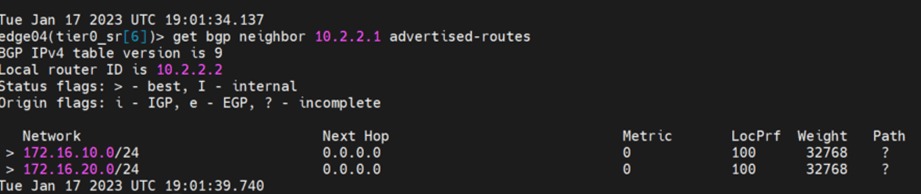
Now the edge in the secondary site is advertising T1 DR segments
Cross check with the multilocation guide:

Since now secondaries are advertising the connected routes, the branch router might prefer the secondary site routes, bear in mind that in Primary/Secondary, the egress is always from the primary site, so this might end in asymmetric traffic which will get dropped
So first let’s validate/test two things:
1-The egress of a VM in secondary site
2-The routing table of the branch router and how it reaches the VM in secondary site
First, to examine how the VM in a secondary site egresses, let’ check the routing table ( and the internal VRF) of secondary edge and do a traceroute:

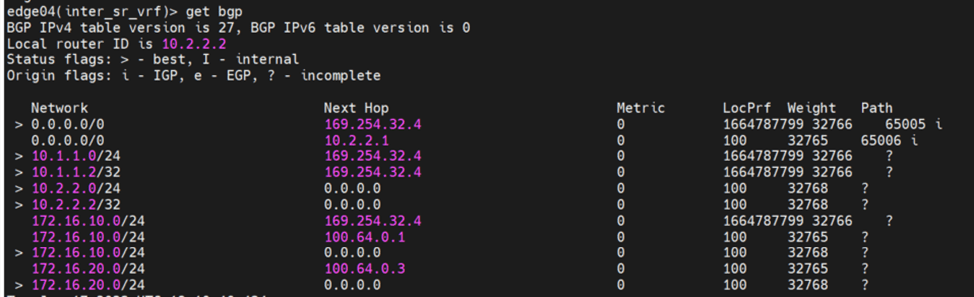
From the above, it’s clearly that the secondary edge will prefer the default route learned from the primary edge node (learned from iBGP) due to higher Local Preference.
Let’s check the branch router routing table:
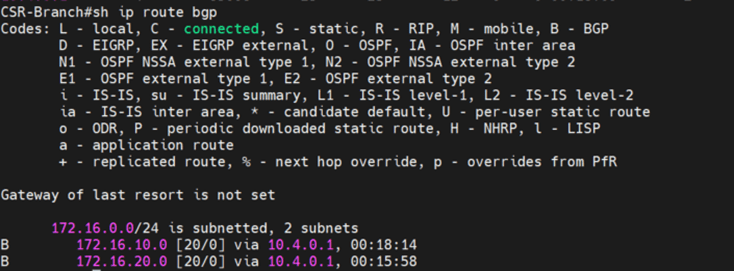
So here it clearly prefers Site B CSR,
In this case the traffic from the VM in a secondary site egresses through primary and ingress will be through secondary,
In this, let’s prefer the edges in primary location, by using AS prepend (making the routes advertised from the secondary site, with higher cost) and check the routing tables again
Create route map with AS prepend:
Apply the route-map to the secondary site neighbor:

Let’s verify the advertised routes from the secondary edge node:

Cross check it with the branch router routing table:

Let’s do final check, Traceroute from VM

Traffic egresses through primary site
Traceroute from Branch router:

 The SDN Blog